Sep 28, 2026Buying Guides
How to Choose a Capacitor Bank Panel for Power Factor Correction
Learn what to check before ordering a capacitor bank panel, including system voltage, power factor, capacitor capacity, harmonics, components and project requirements.
What to Check Before Ordering a Capacitor Bank Panel for Power Factor Correction
Choosing a capacitor bank panel for power factor correction is not simply a matter of selecting a cabinet size and installing several capacitors. The correct configuration depends on the actual electrical system, load characteristics and operating conditions.
For buyers sourcing a power factor correction panel, one of the first questions should be: what information does the supplier need before providing a solution?
Start With Your Actual Electrical System
Before configuration, provide the supplier with basic system information such as rated voltage, frequency, transformer capacity, existing power factor, target power factor and load conditions. If available, a single-line diagram and recent electrical measurements can provide additional information for evaluating the application.
This matters because capacitor capacity and switching arrangement should be selected for the actual system rather than copied from another project.
Are Harmonic Loads Present?
This is an important question when the electrical system includes equipment such as variable frequency drives, UPS systems or other nonlinear loads.
The presence of harmonics can affect capacitor-bank design. A supplier should therefore understand the load conditions before determining whether a conventional capacitor bank is appropriate or whether additional measures need to be considered.
Simply asking for “a 200 kvar capacitor panel,” for example, may not provide enough information to determine the correct configuration.
Ask What Components Will Be Used
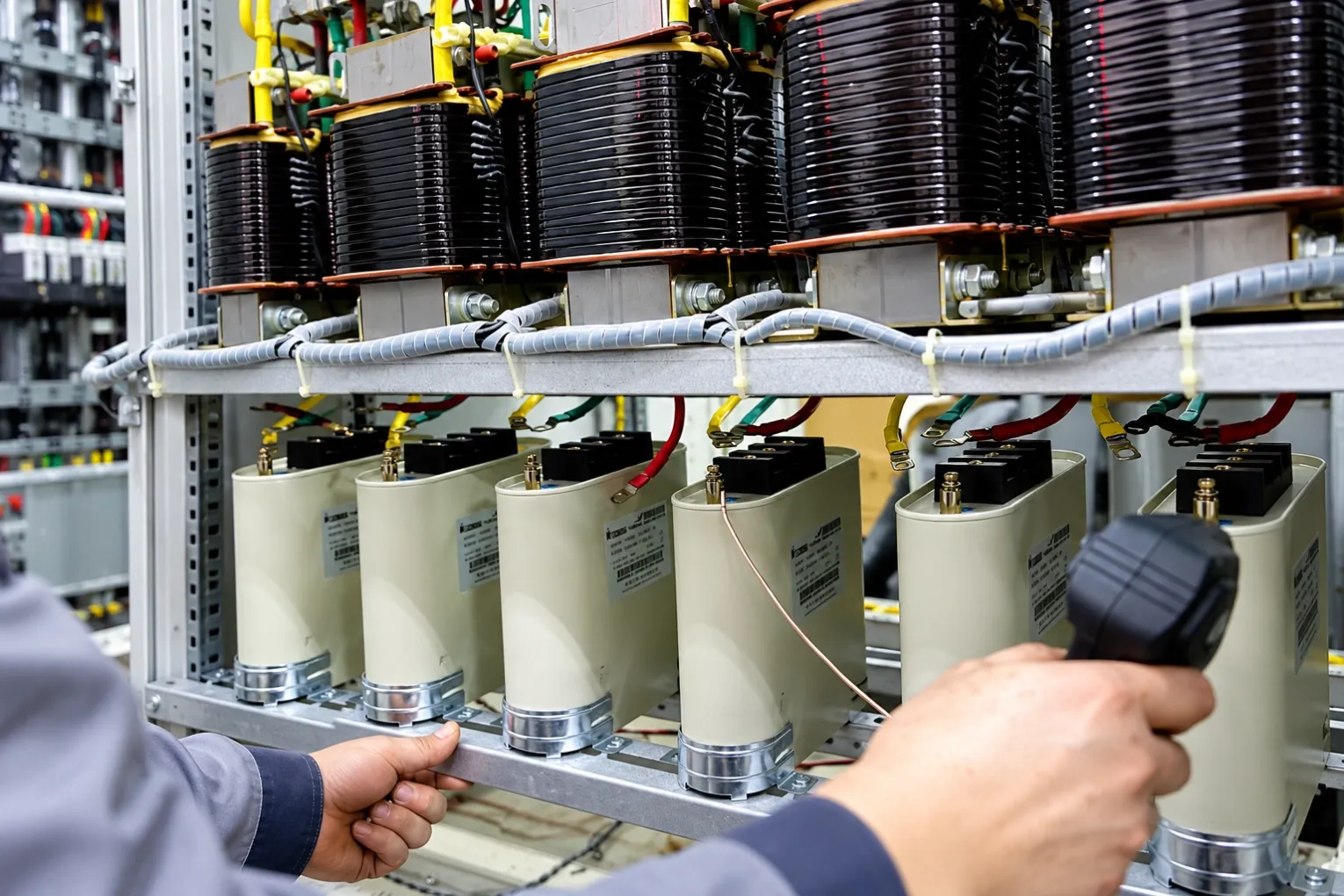
Before placing an order, confirm the proposed capacitors, switching components, protection devices, controller and internal conductors. Component specifications and ratings should match the approved electrical design.
It is also worth checking how the internal components will be arranged. Adequate installation space, secure connections and accessible wiring can make future inspection and maintenance easier.
Make Sure the Supplier Can Build to Your Project
Industrial projects rarely have identical requirements. Cabinet dimensions, capacitor capacity, number of steps, incoming arrangement and component selection may vary from one installation to another.
A useful RFQ should therefore include your electrical parameters, drawings when available, required cabinet dimensions or installation restrictions, and any specified component requirements.
At BOSTENE, capacitor bank and electrical control cabinet projects can be configured around the customer's technical requirements. Providing accurate project information at the quotation stage helps both sides confirm the required configuration before production and reduces the risk of receiving equipment that does not match the application.