Sep 16, 2026Buying Guides
How to Choose a PLC for Industrial Automation | PLC Buying Guide
Learn how to choose a PLC for industrial automation by comparing I/O, communication, expansion, power supply and application requirements. A practical PLC selection guide for industrial buyers.
How to Choose a PLC for Industrial Automation
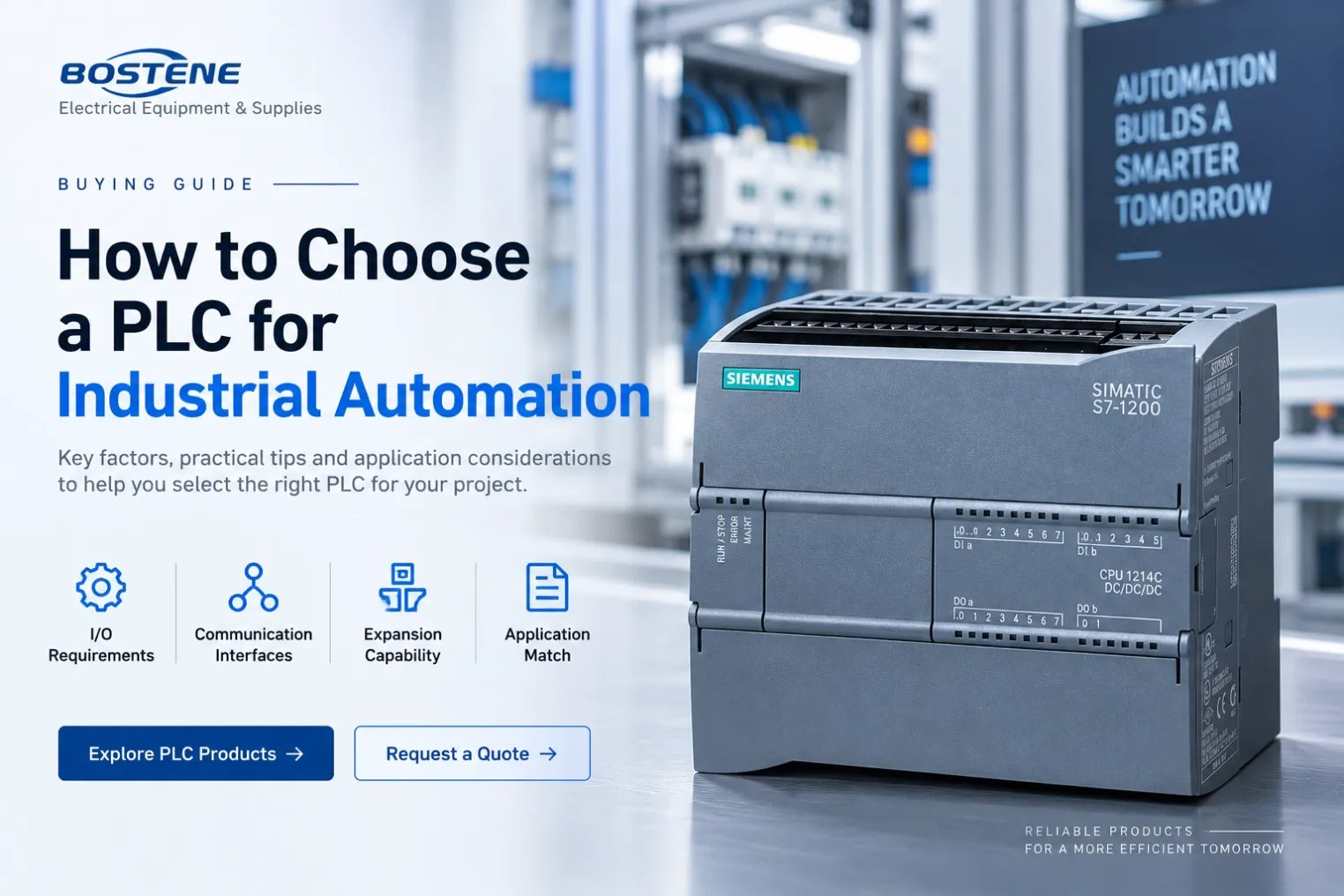
Choosing the right PLC for industrial automation starts with understanding the control requirements of your machine or system. A programmable logic controller (PLC) receives input signals, executes programmed logic and controls outputs to automate industrial processes.
When selecting a PLC, consider the required digital and analog I/O, power supply, communication interfaces, expansion capability and compatibility with other automation components. The PLC should also match the engineering software and communication requirements of the control system.
For compact machines, a PLC with integrated I/O may provide a practical solution. Applications requiring more signals or additional functions may need expansion modules or a modular PLC configuration.
Communication is another important consideration. Depending on the automation architecture, the PLC may need to communicate with HMIs, variable frequency drives, servo systems, remote I/O or other industrial devices.
For replacement projects, always verify the manufacturer, PLC series and complete part number before ordering. Products within the same PLC family can have different I/O configurations, power requirements and communication capabilities.
BOSTENE provides product information for PLCs and related industrial automation components. If you are sourcing a specific PLC, send the brand, complete part number, quantity and application requirements for product and quotation information.