Oct 8, 2026Industry Insights
5–12.5 kVAR Power Factor Capacitor 415V 450V | BOSTENE
5, 7.5, 10 and 12.5 kVAR power factor capacitors for 415V and 450V applications. Check voltage, kVAR, frequency and system requirements before ordering.
5–12.5 kVAR Power Factor Capacitor 415V / 450V: What to Check Before Ordering
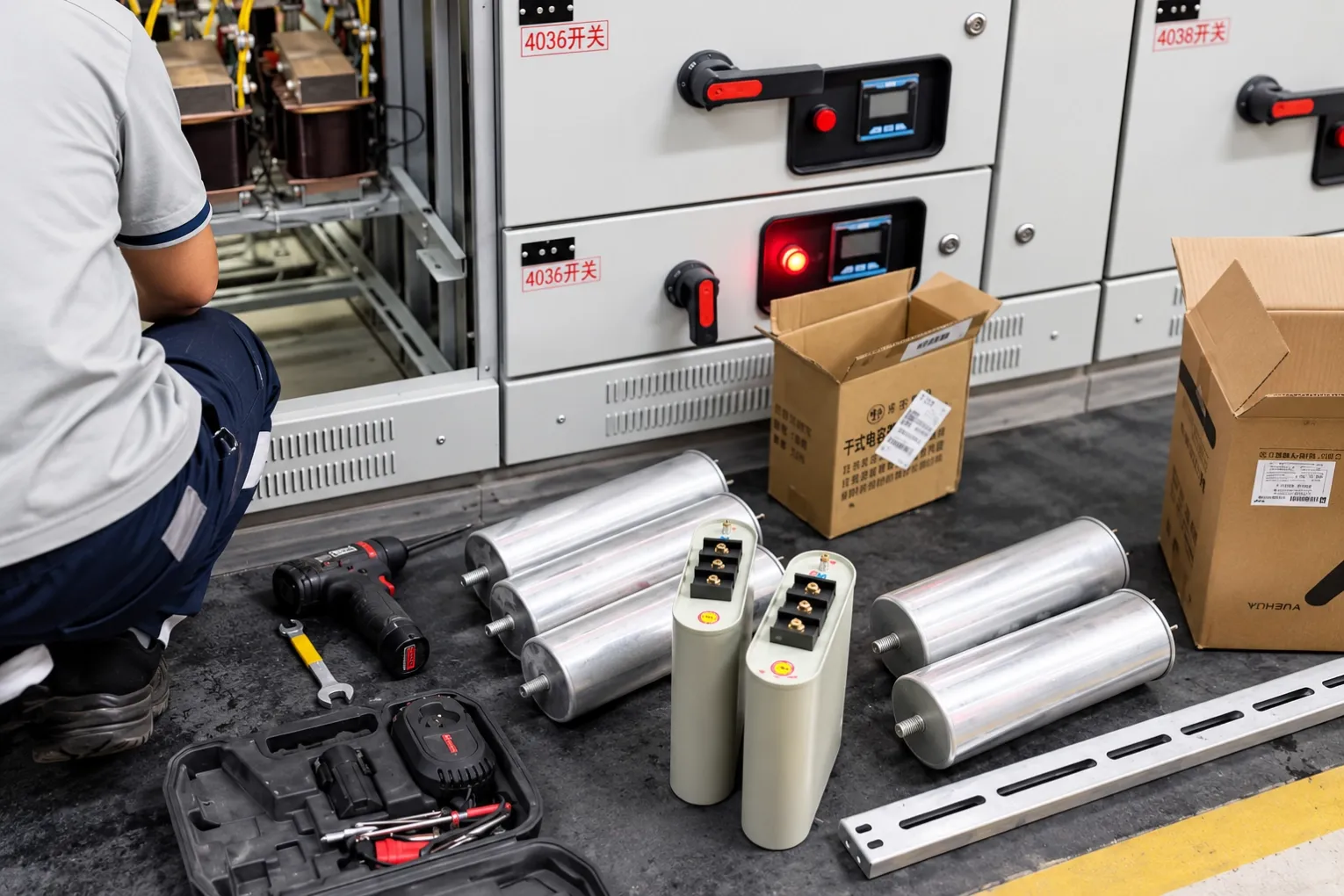
When replacing capacitors in an existing power factor correction panel or selecting components for a new capacitor bank, matching the kVAR rating and operating voltage is essential. A capacitor that physically fits the cabinet is not necessarily suitable for the electrical system.
This power factor capacitor is available in ratings including 5 kVAR, 7.5 kVAR, 10 kVAR and 12.5 kVAR, with 415V and 450V options. It is intended for reactive power compensation and power factor correction applications.
Description
The capacitor uses metallized polypropylene film as the dielectric and is available for three-phase systems, with single-phase versions available on request.
Built-in discharge resistors are included. According to the supplied specification, residual voltage falls below 75V within three minutes after the capacitor is disconnected from the power source.
Key Specifications
Parameter | Specification |
|---|---|
Product | Power Factor Capacitor |
Rated Voltage Range | 220–1000 VAC |
Common Options | 415V / 450V |
Available Power Range | 1–100 kVAR |
Featured Ratings | 5 / 7.5 / 10 / 12.5 kVAR |
Frequency | 50 / 60 Hz |
Connection | 3-phase; 1-phase on request |
Dielectric | Metallized polypropylene film |
Capacitance Tolerance | ±5% |
Ambient Temperature | -25°C to +50°C |
Maximum Relative Humidity | ≤90% |
Maximum Altitude | ≤2000 m |
Dielectric Loss | ≤0.2 W/kVAR |
Protection | Self-protection device |
Case Material | Rust-proof tinplate |
Installation | Indoor |
Standard | IEC 60831 / GB/T 12747 |
Applications
These capacitors can be used as components in power factor correction panels, capacitor banks and reactive power compensation systems where their electrical ratings match the system design.
They can also be considered when replacing existing capacitor units, but the replacement should be selected from the original electrical requirements rather than physical dimensions alone.
415V or 450V: Which Should You Order?
This is one of the first details buyers should confirm.
Do not select 415V or 450V simply because the capacitor is being installed on a particular nominal system voltage. The required capacitor voltage rating should follow the electrical design and actual operating conditions of the compensation system.
If you are replacing an existing unit, provide the original capacitor nameplate information whenever possible.
What Should You Confirm Before Requesting a Quote?
For an accurate quotation, send the required kVAR, rated voltage, frequency, phase configuration and quantity. For replacement projects, photos of the existing nameplate and information about the capacitor bank are also useful.
If the installation has significant harmonic-producing loads, such as variable frequency drives or other nonlinear equipment, include this information in the inquiry. Capacitor selection should be evaluated in the context of the complete power factor correction system.
For BOSTENE inquiries, providing these electrical parameters at the beginning helps confirm the required capacitor specification before an order is placed.